
Padmasana Shrines
The Sacred Lotus Thrones of Bali
Across Bali, from village temples hidden among rice terraces to major state sanctuaries, one structure rises above all others. Known as the Padmasana, its name derives from the Sanskrit words padma, meaning lotus and asana, meaning seat or throne. Together, they translate as "Lotus Seat," a name rich with spiritual meaning. Introduced in the 16th century by the Javanese priest Dang Hyang Nirartha, the shrine was created as a place of worship for Sang Hyang Widhi Wasa, the supreme divine reality in Balinese Hinduism. Unlike gods who can be represented through statues and stories, Sang Hyang Widhi Wasa is understood as the ultimate source of existence itself, limitless, eternal and beyond physical form. For that reason, the throne at the heart of the Padmasana remains empty, symbolising a divine presence that cannot be confined within an image.

A Gateway Between Worlds
The placement of a Padmasana is never accidental. Traditionally, it occupies the most sacred corner of a temple compound, positioned toward the northeast in the direction of Mount Agung, Bali's holiest mountain and spiritual axis. It also differs from most shrines in one striking way, it has no roof. Open to the sky above, the structure creates a direct visual connection between the earthly realm and the heavens. During prayer, there is nothing between the worshipper and the vast expanse above, reinforcing the belief that the supreme divine reality transcends all earthly boundaries and limitations. The shrine faces outward, extending its sacred focus beyond the temple walls and toward the wider universe.
A Map of the Universe
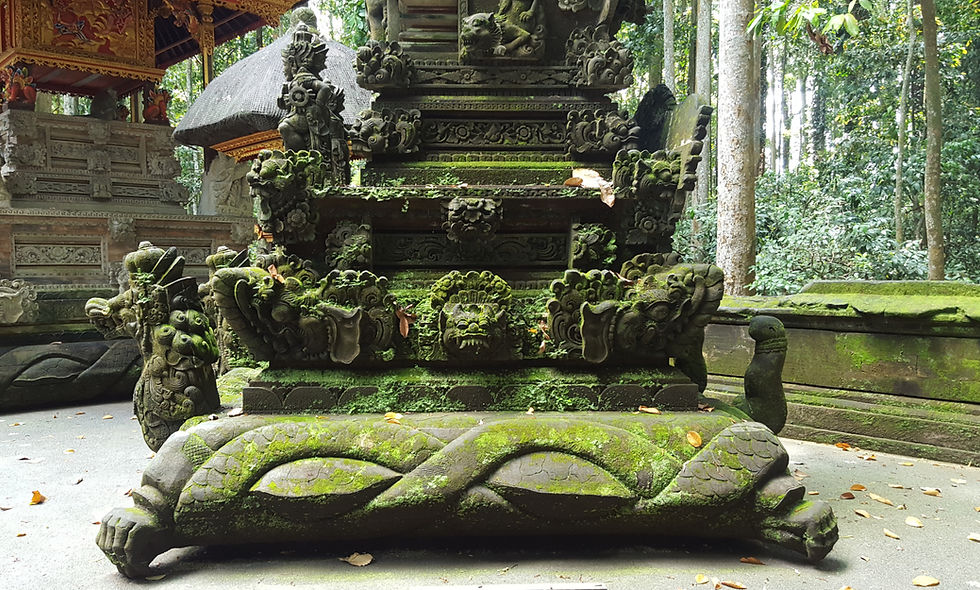
Far more than a throne, the Padmasana is a complete model of the universe rendered in stone. Its vertical design reflects the Balinese Hindu understanding of the cosmos as three interconnected realms. The lowest section represents the underworld, a domain of primordial forces hidden beneath existence. Above it lies the human realm, where life unfolds between the opposing forces of order and chaos. Rising beyond both is the realm of the gods, culminating in the empty throne itself. The symbolism of the lotus is especially important here. Just as a lotus emerges pristine from muddy water, the Padmasana represents spiritual purity rising above the imperfections and distractions of the material world, ascending toward a higher state of awareness.

Foundations of the Cosmos
At the base of many Padmasana shrines sits Bedawang Nala, the great cosmic turtle believed to support the world. Coiled around this ancient being are the naga Basuki and Ananta Boga, powerful serpentine forces associated with balance, prosperity and the foundations of existence. In traditional belief, these beings help maintain cosmic stability beneath the visible world. Their presence serves as a reminder that creation rests upon immense energies that are both creative and destructive, reflecting the delicate equilibrium that sustains life throughout the universe. Together they form the foundation upon which the higher realms of the Padmasana rise.

The God Who Cannot Be Seen
One of the most fascinating features of the Padmasana is the golden figure often positioned behind the throne. Known as Acintya, its name derives from Sanskrit and translates as "the inconceivable" or "that which cannot be thought." The figure embodies one of the most sophisticated ideas in Balinese theology, it exists to represent that which cannot truly be represented. Dang Hyang Nirartha understood that while mystics may contemplate a formless divine reality, most worshippers benefit from a visual point of focus. Acintya therefore acts as a spiritual gateway, directing attention toward the sacred while never claiming to be the divine itself. Instead, it encourages the mind to look beyond the symbol toward the unseen reality that lies beyond all forms.

Golden Light of the Divine
A closer look reveals that every detail of Acintya is rich with symbolism. Its flowing posture resembles a cosmic dance rather than a rigid human stance, suggesting divine energy in constant motion. Flames and rays of light surround the figure, associating it with the brilliance of the sun and the life giving forces of creation. The use of gold is equally deliberate. Resistant to decay and tarnish, gold became an ideal symbol of purity, eternity and divine radiance. When sunlight strikes the figure against the open sky, it appears almost luminous, drawing the eye upward toward the vacant throne above. The lesson is subtle yet profound. While symbols can guide human understanding, the true nature of the divine remains beyond ordinary perception.

The Living Throne
Unlike many ancient religious monuments that now exist primarily as historical landmarks, the Padmasana remains woven into the rhythm of everyday life across Bali. Fresh offerings are still placed before it each morning, prayers continue to rise from temple courtyards, and temple festivals unfold around these sacred structures throughout the year. Its symbolism extends beyond architecture into the inner life of the devotee. In Hindu philosophy, the lotus is also associated with the spiritual heart, the sacred centre where divine presence resides within every individual. In this sense, the Padmasana is not only a cosmic throne but also a reminder of humanity's connection to the sacred. More than four centuries after Dang Hyang Nirartha introduced the shrine, it remains a living symbol of Balinese Hinduism, connecting generations of worshippers to traditions that continue to shape the island's cultural and spiritual identity.

Thanks for reading about the Padmasana Shrines. Check out more amazing legends here!


