
Ulun Danu Beratan
The Floating Temple
Set within the ancient volcanic basin of Bedugul, beneath the watchful slopes of Mount Catur, Pura Ulun Danu Beratan seems to hover between mist, water and the unseen. At 1200 metres above sea level, the air is cool and filled with the scent of moss and incense. Rising from the still surface of Lake Bratan, the temple appears ethereal, its black meru roofs reflected in silver ripples that seem to breathe. Ancient powers dwell here, woven into the lake and mountains, whispering through mist and shadow with a presence both commanding and unseen.
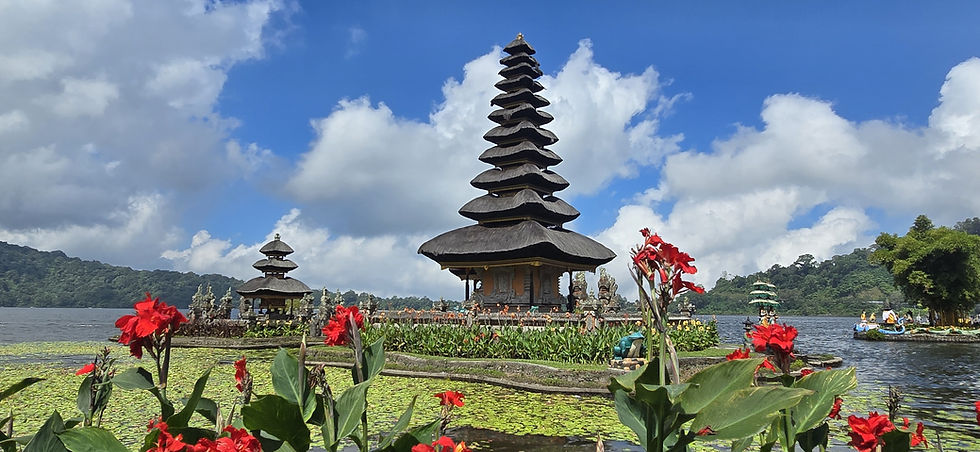
Long before the temple’s graceful pagodas rose above the lake, this site was already ancient ground. Archaeological relics, a stone slate and sarcophagus, found nearby date back to around 500 BC, marking it as a place of ritual since the megalithic age. Locals say these relics once belonged to a forgotten ruler or priest and that disturbing them brings misfortune. The sarcophagus is still treated with reverence, never touched without offerings. Written records from 1556 confirm that a temple already stood here, a continuation of a faith that stretches far deeper than the Hindu era itself.

Dedicated to Dewi Danu, the Goddess of water, lakes and rivers, Beratan Temple is more than a shrine, it is the island’s beating heart. Her power is said to run through every channel of Bali’s sacred subak irrigation system, blessing the rice terraces and mist veiled highlands with life. The farmers of Bedugul still bring offerings to her altar, asking her to keep the waters pure and the harvest plentiful. Yet the legends warn that if she is angered, the lake may rise and the fertile valleys below will drown in her tears.

The calm beauty of Lake Bratan conceals a darker lore. For centuries, villagers have spoken of guardian spirits who dwell beneath its surface, protectors of the sacred waters who punish those who defile or disrespect them. Fishermen who have ignored the temple’s rituals tell of sudden tempests that erupt without warning, their boats overturned by unseen hands. Others claim to have seen strange lights gliding across the lake at night, only for them to vanish beneath the waves. In one old story, a fisherman followed these lights and never returned, his empty boat found adrift at dawn.
The mountain too, is steeped in whispers. Gunung Catur, rising above the lake, is often veiled in a cold, dense mist. Locals call it the breath of the hyang, ancestral spirits that roam between realms. Hikers have reported hearing faint footsteps behind them in the fog or voices calling their names when no one is there. Offerings left at Pura Pucak Mangu, a small shrine on the mountain’s slope, are said to appease these wandering souls. Some say that at dusk, when the mist thickens, the veil between the living and the dead grows thin.

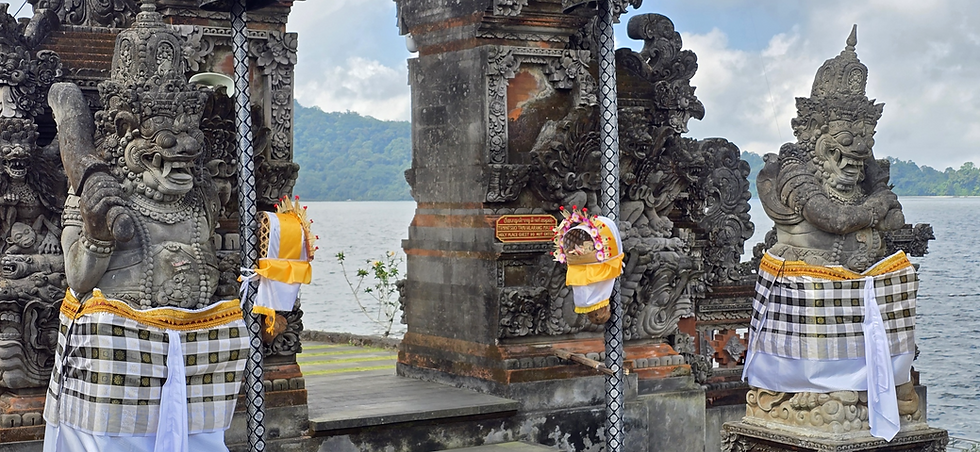
The temple complex is divided into four sacred zones, each dedicated to a different divine force. Shrines to Shiva and Parvathi embody destruction and rebirth, while Vishnu represents preservation and Brahma creation. The fourth area is where villagers come to pray for fertility, prosperity and balance. Beyond these Hindu shrines, the grounds also contain a rare Buddhist stupa, hinting at the site’s layered spiritual history. Together, the Tri Murti shrines represent the eternal cycle of existence. The colours red, black and white are woven throughout the temple, symbolising Brahma’s fire, Vishnu’s endurance and Shiva’s cleansing power. Locals believe that when these offerings are neglected, nature itself can fall out of harmony and the lake may rise in unrest.

Lake Bratan once stretched as a single vast expanse of water but it is believed ancient tremors tore it apart, creating the three lakes known today as Beratan, Buyan and Tamblingan. Oral traditions claim it was Dewi Danu herself who caused the fracture, angry that humans had forgotten to honour her. Since then, earthquakes have been interpreted as her warnings. And some say that deep beneath the water lie the remains of older sanctuaries, sunken temples swallowed by the goddess’s sorrow, only visible when the water is still and the mist is low.

When the monsoon rains return and the lake rises around its walls, Pura Ulun Danu Beratan seems to float on the water, as if testing the boundary between the human and the divine. In the grey hours of dawn, as fog drifts across the highlands and the temple’s reflection fades, it feels alive. Beneath the still, shadowed waters, the sacred lake keeps its secrets, a place where gods tread among the clouds and the mountain still carries the restless memory of ancient fire.
🗺️ Location
Pura Ulun Danu Bratan, Candikuning Village, Baturiti District, Tabanan Regency, Bali, Indonesia
🚆 How to get there
Pura Ulun Danu Bratan sits in Candikuning Village in Bali’s Bedugul Highlands, about 54 km north of Denpasar (around 1 hour 45 minutes) or 45 km northwest of Ubud (roughly 1.5 hours). Early mornings can be cool and misty, so dress accordingly. The temple is best visited as part of a full day tour with a private driver, which costs around 800,000 t0 1,000,000 IDR per car per day, allowing you to enjoy the scenic mountain roads and nearby attractions such as Banyumala Twin Waterfalls, Brahmavihara Arama Buddhist Monastery or Banjar Hot Springs.
⭐ Attraction Info
Pura Ulun Danu Bratan is open everyday between 7am - 7pm. The entrance fee for international visitors is 75,000 IDR for adults and 50,000 IDR for children aged between 5 and 10 years old. Parking costs range from IDR 5,000 - 10,000 IDR depending on vehicle type. The grounds are well maintained and include toilets, a large car park, souvenir stalls, restaurants and cafés, beautifully landscaped gardens and boat rentals on Lake Bratan. As one of Bali's most iconic landmarks, the temple’s image is featured on the 50,000 IDR banknote.

Thanks for reading about Ulun Danu Beratan. Check out more awesome destinations here!


