
Pura Bukit Dharma Durga Kutri
Updated: Feb 13
The Temple of Death and Shadows
High atop the hills within this ancient temple complex, Pura Durga Kutri stands as a shadowed sentinel over the living and the dead. Built in 913AD, this sacred Hindu temple is dedicated to Durga Mahisasuramardini, the fearsome Goddess of death, destruction and cosmic balance. Unlike the gentle deities worshipped elsewhere, Durga here is a force of divine wrath. She is righteous, terrifying and unyielding. Villagers leave offerings of black rice, blood red flowers and incense to appease her, believing that ignoring her will invite not only misfortune but the restless spirits that linger in the night.

At the heart of Bukit Dharma Kutri is the tale of Mahisasura, the buffalo demon whose power threatened both gods and humans. Born from chaos and arrogance, Mahisasura gained immense strength through dark rituals and meditation, becoming nearly unstoppable. The gods, unable to contain his terror, summoned Durga, who confronted him atop a blood red battlefield. Their clash was fierce and unrelenting. Mahisasura shifted between monstrous forms, charging like a rampaging bull, while Durga countered with divine weapons, striking with precision and unyielding force. After days of brutal combat, she drove her sword through his heart, finally restoring balance to the world. The temple’s carvings preserve this epic struggle, immortalising Durga’s triumph over arrogance, destruction and chaos.

Durga’s story in Bali is inseparable from the island’s darker spirits. Her power reaches far beyond death, standing as the eternal counterbalance to Rangda, the demon queen of chaos and her Leyaks, malevolent, shape-shifting spirits that steal life and spread disease. While Rangda embodies unbridled destruction, corruption and fear, Durga wields controlled, righteous wrath, enforcing cosmic order with terrifying precision. At Bukit Dharma Kutri, locals whisper that her statue strikes invisibly at the Leyaks, her gaze sweeping the hills like a living blade, protecting villages from illness, death and supernatural terror. On certain nights, shadows twist unnaturally along the temple walls, as if Rangda’s minions skirt the edges of her domain, testing her vigilance but never daring to cross it.
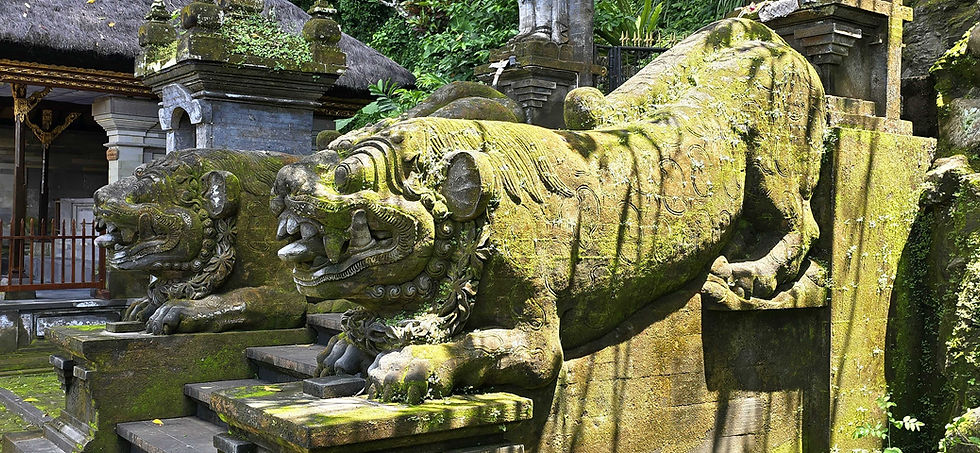
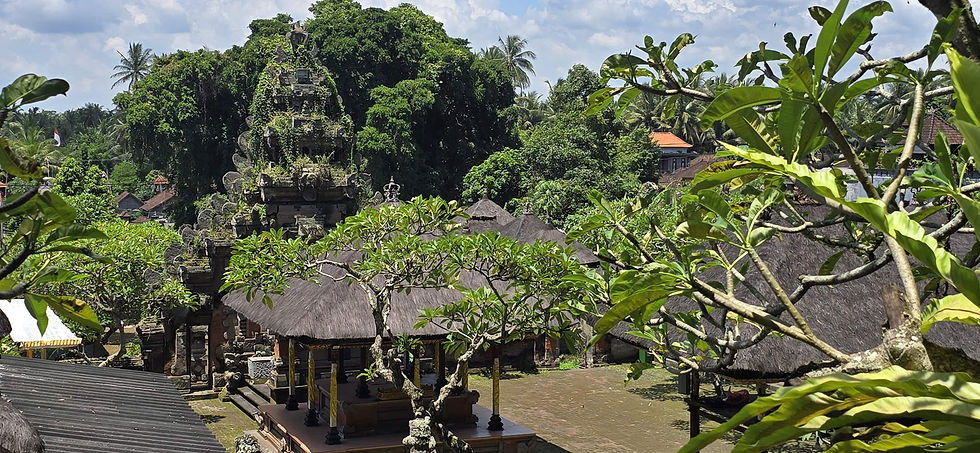
The temple complex of Bukit Dharma Kutri is a striking display of Balinese Hindu architecture, with terraced stone platforms, ornate gateways and carved walls that have weathered over a millennium. The inner courtyards feature statues of Ganesha, Bhatara and other guardian deities, each intricately sculpted and bearing the weight of centuries of devotion. Small shrines and pavilions honour Buddhist figures, reflecting the temple’s syncretic spiritual heritage. Ancient stone relics, ceremonial urns and guardian statues are carefully preserved, some inscribed with messages from centuries past. Sacred banyan trees and moss draped walls lend an air of solemnity, making the temple feel both timeless and mysteriously alive.

Twice a year, the temple hosts Piodalan, a festival of fear and devotion. Priests clad in black robes reenact Durga’s eternal war, carrying effigies of demons in ceremonies meant to seal away death and darkness. Torches flare without wind, shadows dance unnaturally and villagers feel a shiver as if the Leyaks themselves are present, restrained only by the Goddess’s wrath. The festival is a vivid, terrifying reminder that in Balinese Hindu cosmology, death, chaos and divine justice are intertwined.

Pura Bukit Dharma Durga Kutri is not a temple for the faint of heart. It is a place where Hindu gods walk among shadows, where the dead whisper through the stones and where the balance between order and chaos is measured in offerings, devotion and fear. Durga watches eternally, reminding all who enter that life and death are inseparable and the darkness is never far from the faithful.
Thanks for reading about Pura Bukit Dharma Durga Kutri. Check out more awesome destinations here!

🗺️ Location
Jalan Raya Buruan, Buruan Village, Gianyar Regency, Bali, Indonesia
🚆 How to get there
Pura Bukit Dharma Durga Kutri is approximately 12 km southeast of central Ubud, perched on the hills of Bukit Dharma. By car or taxi, the drive takes around 25 - 30 minutes, following Jalan Raya Ubud and Jalan Raya Tegallalang before turning toward Buruan Village. Motorbikes or Gojek riders can reach the temple in 20 - 25 minutes, navigating narrower village lanes and often avoiding heavier traffic. A taxi or Grab ride typically costs 80,000 - 120,000 IDR, while a motorbike or Gojek ride costs around 25,000 - 40,000 IDR. Given the location, I would suggest asking your driver to wait for you.
⭐ Attraction Info
The Pura Bukit Dharma Durga Kutri temple is typically open daily. While specific opening hours are not widely published, it is advisable to visit during daylight hours between 8am - 5pm, to fully appreciate the temple's architecture and surroundings. Early morning visits are recommended for a serene experience, avoiding the midday heat and crowds. Visitors should dress modestly in traditional Balinese attire, such as a sarong and sash, which can often be rented at the temple entrance. Entry is free, though donations are appreciated to support the temple's upkeep. The best time to visit is during the dry season, from April to October, when the weather is more favourable for exploring the temple's grounds.


