
The Sacred Nāgas of Bali - Guardians of the Island
Bali’s Divine Serpent Guardians
In the mystical landscape of Bali, where smouldering volcanoes brood above cascading emerald rice terraces and the tides whisper ancient secrets, serpentine beings known as Nagas hold a revered place in the island’s cosmology. These mythical serpent deities, often depicted as formidable, dragon-like creatures adorned with ornate golden crowns and shimmering scales of iridescent green and gold, are considered powerful protectors of water, fertility and the delicate spiritual equilibrium between the underworld, the earthly plane and the heavens. Though Nagas are deeply rooted in Hindu and Buddhist traditions across South Asia, where rituals devoted to them have been meticulously performed for over two millennia, the Balinese Naga has evolved into a distinctly local guardian spirit. Interwoven into the very fabric of Bali’s temples and ceremonial life, these beings continue to shape the island’s spiritual identity, offering a uniquely localized expression of ancient myth that resonates through the ages.
Balancing Worlds Through Ancient Customs
Within the intricate tapestry of Balinese Hinduism, Nagas are powerful mythological beings that embody both spiritual energy and elemental forces, playing a crucial role in maintaining cosmic harmony. Among the most revered of these entities is Naga Basuki, the absolute guardian of balance, who is believed to coil his massive body protectively around Mount Agung, the island’s most sacred and volatile peak. His potent presence is frequently invoked in temple architecture and sacred purification rituals, particularly at shrines located near volcanic springs and holy water sources where the earth's raw energy meets human devotion. Beneath this mountainous realm rests Anantaboga, another foundational Naga who represents the vast underworld and the concept of infinity. Often conceptualised as a colossal, primordial serpent resting silently beneath the earth's crust, Anantaboga anchors the spiritual foundations of the world, stabilising the ground upon which humanity walks.

The Island’s Sacred Guardians
Naga Taksaka, by contrast, is a sky linked serpent intimately associated with the element of air, lightning and the upper ethereal realms. Often depicted as residing at the sweeping peaks of temples and high mountains, such as the mist-shrouded heights of Pura Lempuyang, Naga Taksaka symbolises rainfall, the atmosphere and the dynamic, changing balance of nature. Together, these three entities form an elemental trinity that connects and stabilises the island, anchoring its physical mass to the ocean floor while shaping a sacred geography of mountains and skies. This trinity reinforces the core Balinese belief in preserving the delicate balance between the three existential realms, the underworld (bhur), the earthly plane (bwah, and the luminous heavens (swah).

The Dragon of Royal Cremation
Distinct from these immortal cosmological Nagas is the Naga Banda, a dramatic, dragon shaped effigy used exclusively during royal cremation ceremonies, known as pelebon. Unlike the bade, or the soaring, multi tiered cremation tower utilised for commoners, the Naga Banda is a sacred vehicle reserved specifically for cremating Balinese royalty, particularly those who trace their noble ancestry back to King Dalem Waturenggong, the legendary 16th century ruler of the Gelgel dynasty. This magnificent effigy is far more than a physical vessel, it is a profound symbolic representation of spiritual bondage. The name itself is derived from ancient Sanskrit, with Naga meaning serpent or dragon and Banda translating to binding or shackle, highlighting its metaphysical function as a creature that temporarily ties the departing soul to the material world.

The Sacred Arrow and the Soul’s Journey
During the high point of the funeral ritual, a high priest shoots a ceremonial arrow at the effigy, symbolically shattering the Naga’s restrictive grip and allowing the soul of the deceased aristocrat to ascend unburdened to the heavenly realm. The legendary origin behind the Naga Banda traces back to the epic tale of Ida Dang Hyang Astapaka, a revered priest who established the historic Taman Sari Temple. He is said to have miraculously tamed a raging dragon with a sacred arrow, a miraculous act which foreshadowed the ultimate liberation of the king’s soul and its subsequent journey to Nirvana. This powerful imagery, combining deep seated myth, priestly authority and royal lineage, illustrates how deeply the Naga Banda is woven into Balinese beliefs regarding life, death and the divine transition of the spirit.

Forces That Anchor the Spiritual Realm
The active role of Nagas in Balinese ritual life is deeply symbolic, highly visible and central to community life. During major temple festivals, such as Odalan or the great island wide purification ceremony known as Melasti, elaborately crafted Naga effigies are paraded in vibrant, music filled processions down to the crashing shores of the sea. These rituals are not just symbolic gestures, they are believed to physically cleanse the village, banish negative energies, restore spiritual harmony and renew the vital connection between the seen world (sekala) and the unseen world (niskala). Architecturally, these serpentine forms often flank temple gates or guard the outer courtyards, serving as a permanent visual reminder to devotees of the ever present balance between chaos and order.

Gateways to the Unseen
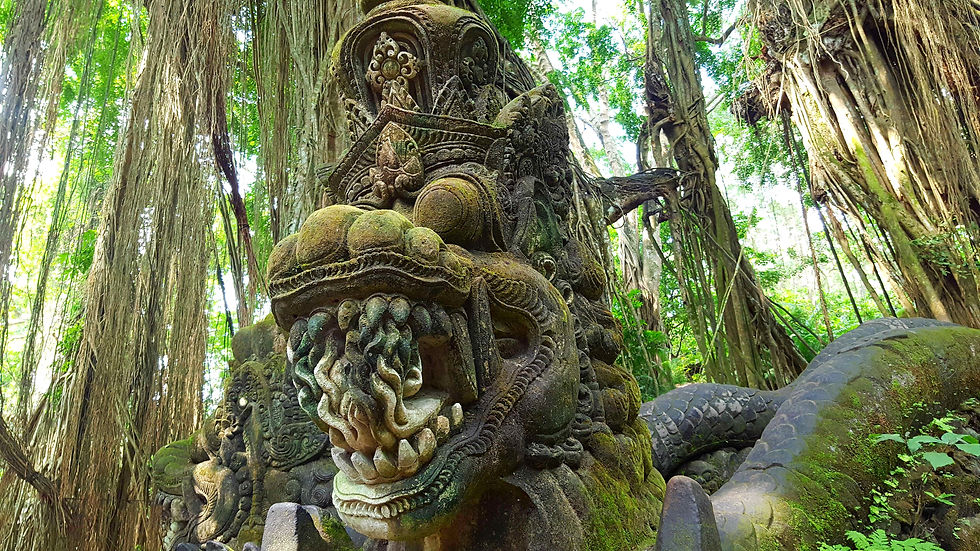
Architecturally, Nagas are masterfully carved into stone stairways, temple balustrades and sacred fountains across the island. A common sight at famed water temples like Tirta Empul or Goa Gajah is the presence of these serpentine sculptures curling around water spouts, their stone mouths channeling the pristine flows. These are not mere artistic decorations but functional spiritual guardians meant to protect the sacred energy of flowing water, which in Balinese cosmology is the ultimate conduit for divine energy (tirtha). In this way, they are associated with both the physical purity of the island's water supply and the metaphysical purification of the human soul. Balinese Nagas also represent a highly localised and peaceful interpretation of older Indian and Southeast Asian serpent myths. While Indian Nagas are often feared or respected for their destructive and unpredictable powers, the Balinese versions tend to emphasise balance, protective guardianship and harmonious cooperation with human communities. In some traditional villages, offerings are still quietly laid at the roots of sacred banyan trees or along rushing riverbanks where Nāgas are believed to dwell, a beautiful nod to the animist beliefs that predated the arrival of Hinduism on the island.

Balancing Life and Death
Local legends surrounding these creatures are both abundant and rich in moral meaning. In East Bali, some communities believe that a giant Naga resides deep within the volcanic caldera of Lake Batur, guarding the entire agricultural region from devastating drought and disease. Another prominent tale links Naga Basuki directly to the formation of the Mother Temple, Besakih, where his divine body is said to coil around the mountain to contain its volatile underworld power. These stories, passed down through generations of oral tradition, serve both as moral instruction and environmental reverence, encouraging an deep respect for natural forces and sacred geography.

How Ancient Legends Shape Modern Bali
Today, the Naga continues to inspire Balinese art, theatrical dance, and cultural identity. Whether rendered in the flickering shadows of wayang kulit puppet theatre or painted in vivid colours across temple banners and ceremonial umbrellas, the image of the Naga lives on. In an era where rapid modernity and global tourism shape Bali’s daily rhythms, the enduring presence of these serpents is a powerful reminder that the island’s spiritual foundations remain very much alive. They are not just dead mythological beasts but living guardians, watchful, coiled and sacred, resting eternally in the heart of Bali’s living culture.

Thanks for reading about The Sacred Nāgas of Bali - Guardians of the Island. Check out more awesome legends here!

Guardians of the Island - The Sacred Nāgas of Bali can be found at temples everywhere


