Mengening Water Temple
Bali’s Hidden Sanctuary of Sacred Springs and Ancient Relics
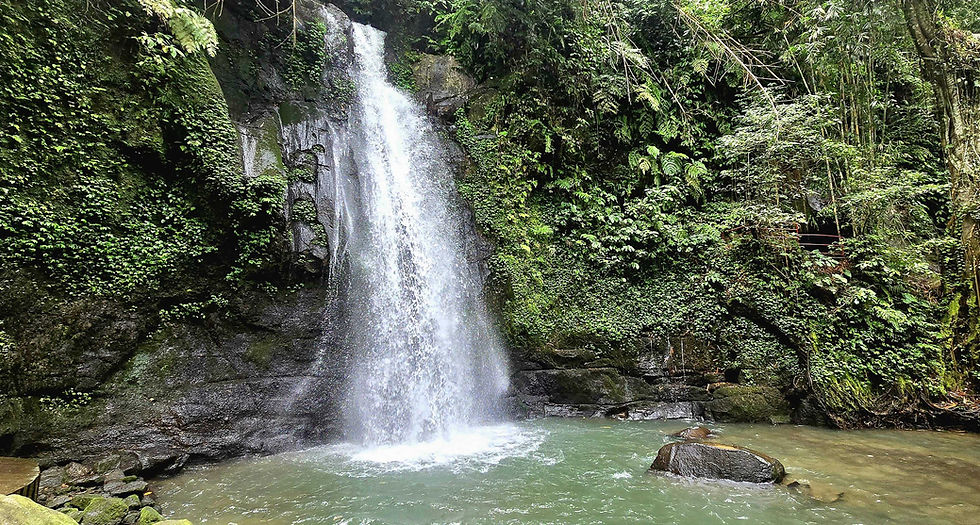
Set within the ancient ritual corridor of Tampaksiring, Pura Mengening stands as one of Bali’s oldest functioning water temples, its origins traced to 1022 AD during the reign of King Marakata. The temple is positioned beside the revered Pakerisan River, whose life giving currents have guided purification rites, sustained agricultural cycles and framed sacred ceremonies for centuries. For nearly a thousand years, water has flowed along the same carefully carved channels, connecting each terrace, pool and shrine in a network designed for both practical use and spiritual purpose. In this way, Mengening remains more than a historical site. It continues to operate as a living centre of cleansing and continuity, never merely a relic of the past.

At the heart of Mengening lies its sacred water garden, where ten stone spouts feed a central pool, each shaped with precision to guide the spring’s flow. Balinese Hindus see this water as a gift from the god Indra, drawn from deep underground springs infused with spiritual potency. Here, Melukat, the temple’s ritual of purification, transforms ordinary water into a medium for cleansing karmic residue, emotional burdens and lingering negativity. Each droplet carries a quiet power, linking the earthly and divine, reaffirming the temple’s purpose as a space where the body, mind and spirit can be restored.

The waters of Pura Mengening are said to possess a subtle, sentient presence, responding to the intentions of those who approach. Ancient legends describe priests who communed with the springs to receive guidance from the gods, listening for whispers carried beneath the surface. Travellers have reported sudden dizziness, unexplained chills or visions of their own hidden faults, signs that the water recognises impurity or unresolved karma. The springs function as both blessing and trial. Only those who come with proper reverence and knowledge of ritual leave cleansed, while the careless or arrogant may find the waters reflecting their inner fears back with unnerving clarity.

Among Pura Mengening’s most sacred relics are the Lingga and Yoni, ancient stone carvings that channel Shiva’s generative and sustaining energies. The Lingga, a vertical cylinder, embodies male creative force, while the Yoni, a circular base, represents the female principle and the womb of creation. Together, they form a tangible cosmic union, anchoring the temple’s energy both physically and spiritually. At Mengening, the relics are deliberately positioned so that the spring water courses around them, reinforcing their ties to life, fertility and the forces that shape existence. Devotees acknowlede the carvings as conduits through which divine power flows into the world. These are not mere decorative sculptures; they are living symbols of creation and transformation, their presence reminding all who enter that the divine permeates the cycles of daily life.

The temple’s design showcases classical Javanese Hindu aesthetics, featuring tiered shrines, elaborately carved gates and stone statues and reliefs depicting gods, demons and mythological scenes. Beyond artistry, its true brilliance lies in its engineering. Terraces, pools and channels were carefully calculated to guide spring water throughout the complex, maintaining steady flow while preventing erosion or overflow. Shrines and statues follow the slope, catch the sunlight and trace the water’s path, merging ritual and function into a single, harmonious system. Centuries later, the network remains fully operational, a silent testament to the ancient builders’ extraordinary mastery of hydraulics, stonework and spatial design.


Unlike larger, more heavily commercialised temples such as the nearby Tirta Empul, Mengening preserves an authentic and intimate atmosphere. Here, surrounded by mostly locals, pilgrims encounter the sacred waters without distraction, allowing the ritual to feel deeply personal. Secluded terraces, gently flowing pools and understated carvings create a space where the weight of history is tangible and the presence of unseen forces is subtly felt. As an officially recognised Cultural Heritage site, the temple’s quiet, genuine character carries both spiritual and historical authority, giving it a mysterious aura and marking it as a sanctuary of living devotion rather than a tourist spectacle.

Here, history is not recorded in books but encoded in the landscape itself. The terraces remember the weight of each footstep, every stone bears silent witness to a thousand years of devotion and the channels still guide sacred waters with a rhythm that threads the past with the present. Centuries of human effort, architectural ingenuity and ritual intent converge into an unbroken continuity, a quiet testament to a temple that exists beyond time, telling a story older than memory itself.

Thanks for reading about Mengening Water Temple. Check out more awesome destinations here!

🗺️ Location
Jalan Tirta No.25M, Sareseda, Tampaksiring, Gianyar, Bali, Indonesia
🚆 How to get there
Mengening Water Temple is roughly 7 km's northeast of downtown Ubud and takes around 20 - 30 minutes to reach depending on traffic. A taxi ride costs around 100,000 - 150,000 IDR, while a Go-Jek or Grab motorbike ride is cheaper at about 50,000 - 70,000 IDR. The temple is close to several other attractions, making it easy to explore the area in one trip. Nearby highlights include Tirta Empul Temple, famous for its holy spring water, Gunung Kawi Temple, an ancient rock cut complex about 3 km's away and the scenic Tegalalang Rice Terraces, roughly a 20 minute drive from Pura Mengening.
⭐ Attraction Info
Pura Mengening is open daily between 9am - 5pm and the entrance fee is 50,000 IDR for international visitors, which includes sarong and sash rental, if you don't have your own. The temple’s main attraction, the Melukat purification ceremony, costs between 200,000 and 300,000 IDR, covering the sarong, offerings and bottled water. The experience lasts about 2 - 3 hours. The best time to visit is in the morning between 9am and 11am, when the temperatures are cooler and crowds are minimal. Those who only wish to explore the temple and its sacred pools without participating in Melukat can spend about 30 - 45 minutes.
🔗Official Website