
The Melukat Ceremony
Bali’s Ancient Ritual of Renewal
Long before Bali was mapped or mythologised by outsiders, the island’s people were already descending stone steps into sacred springs, surrendering themselves to ritual waters. Over 1100 years ago, during the Warmadewa dynasty, inscriptions record the formal establishment of holy bathing places tied to royal authority and divine sanction. The word melukat stems from lukat, which means to cleanse and release, but its meaning has never been merely hygienic. It refers to the lifting of leteh, an invisible spiritual residue believed to cloud the human soul. In Bali’s cosmology, impurity is not dirt but imbalance and water is not liquid but a conduit between worlds.

A Temple of Eternal Waters
Few places embody this more vividly than Tirta Empul, founded in 962 AD under King Sri Candrabhayasingha Warmadewa. An inscription unearthed at the site confirms its antiquity, anchoring myth to stone. The temple’s name, “holy spring”, hardly captures the atmosphere of the bathing courtyard, where thirteen carved spouts pour crystal water into a long rectangular pool. Each fountain has its own spiritual function, protection from illness, purification of the mind, release from misfortune. Devotees enter clothed in temple white, press their palms together and move methodically from one spout to the next, bowing their heads beneath the relentless, cold cascade. Petals cling to the water’s surface, incense smoke coils into the tropical air and the ancient stone walls glisten dark with centuries of touch.
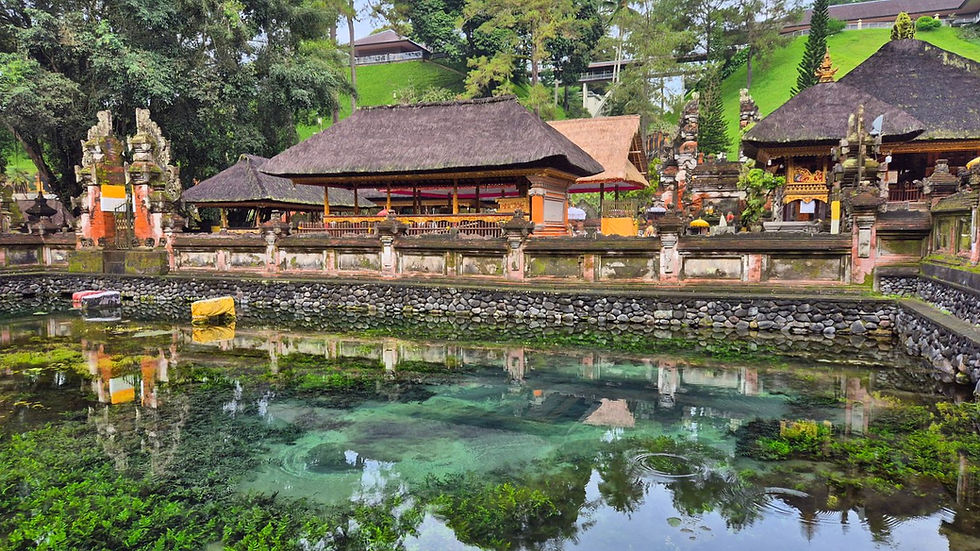
Guardians of the Divine Springs
The spring’s origin story deepens the ritual’s gravity. Balinese lore tells of the tyrant Mayadenawa, who poisoned the waters to weaken the god Indra’s army. In response, Indra pierced the earth with his spear and from that wound burst a miraculous spring that revived his fallen warriors. The myth transforms the act of bathing into resurrection. When participants immerse themselves beneath the fountains, they are reenacting that divine salvation, stepping symbolically from death into restored vitality. Even the temple’s guardian statues, moss laced and stern faced, seem to watch not as decoration but as witnesses to an ancient covenant between water and life.

A Journey into Ancient Waters
Upstream lies Pura Mengening, older in atmosphere if not definitively in date. Archaeological fragments suggest its foundations may reach back before the 11th century. Unlike the structured pools of Tirta Empul, Mengening feels elemental. Narrow stairways descend into shaded enclosures where water slips quietly from stone lined channels. Banyan roots clutch the temple walls, carved guardians with bulging eyes and curling fangs flank shrines blackened by time. Here, melukat is stripped of grandeur. The silence is heavier, the air cooler, the ritual more intimate, as though one has stepped into Bali’s animist past, when springs were inhabited by spirits long before Hindu cosmology gave them names.

Rites of Passage in Everyday Life
Melukat is not reserved for temple complexes. It permeates the rhythm of Balinese life. Before weddings, tooth filing ceremonies (metatah) or the three month baby rituals (nyambutin), holy water (tirta) is sprinkled from silver vessels or flicked from woven leaves by priests chanting mantras rooted in Sanskrit traditions carried to Bali after the fall of the Majapahit kingdom in the late 15th century. These rites do not merely mark transitions, they recalibrate the soul. A child entering social life, a couple binding their destinies, each must be ritually cleansed to align with cosmic order.

Cosmic Balance and Sacred Waters
That cosmic order is expressed through Bali’s triadic philosophy: harmony between gods (parahyangan), humans (pawongan) and nature (palemahan). By the 14th century, sacred springs were integrated into the subak irrigation networks that governed rice cultivation. Water flowing from volcanic mountains such as Mount Batur was considered divine descent, blessing both fields and flesh. To contaminate water was not only practical folly but spiritual disruption. Melukat therefore sits at the intersection of theology, agriculture and kingship, a reminder that survival itself was sanctified through ritual.

Ancient Ritual in the Modern World
Today, melukat continues beneath the same tropical light that shone on 10th century kings. Urban Balinese, farmers, priests and pilgrims still bow beneath mountain fed fountains, especially on auspicious days within the 210 day Pawukon calendar. The ceremony has absorbed modernity without surrendering its essence. When the cold water strikes the crown of the head, conversation ceases. Breath catches. For a fleeting moment, the noise of the visible world dissolves. What remains is the ancient belief that renewal does not descend from the heavens; it rises quietly from beneath the earth, flowing to restore balance for all who seek it with intention.

If you want to experience a Melukat ceremony, the most traditional and spiritually powerful sites are Bali’s sacred springs, such as Tirta Empul or the quieter Pura Mengening or my personal favourite Taman Campuhan Sala. At these temples, you can participate under the guidance of a pemangku or Brahmana priest, using holy water drawn directly from the spring and following centuries old ritual practices. Most authentic experiences do not charge a fixed fee, instead, visitors offer donations according to their means, reflecting the spiritual nature of the ceremony rather than blatant commercial profit. Be cautious of locations that cater primarily to tourists, offering staged experiences for high prices. The true melukat is rooted in devotion, simplicity and ritual precision, not spectacle. For the most meaningful experience, approach with respect, dress appropriately and follow the priest’s guidance rather than seeking the most Instagram friendly version. Locals can direct you to genuine melukat experiences.


