
Moksa Temple
The Spiritual Heart of Mas Village
Honouring the Hindu concept of spiritual liberation, which symbolises the soul’s release from the cycles of birth and rebirth, Pura Moksa, located in Mas Village just south of Ubud, is a small but spiritually significant temple that reflects the Balinese understanding of life, death and the journey of the soul. Unlike the famous historic temples around Bali, the temple is a local sanctuary established by the village community to provide a space for personal devotion and reflection, shaping its function as a contemplative site rather than a centre for public spectacle.

The temple’s architecture is modern and modest, with open air shrines and wooden carvings characteristic of Mas artisanship. The carvings often include symbols of spiritual protection and cosmic balance, representing the coexistence of benevolent and destructive forces. The surrounding stone pathways and low walls create an intimate environment, allowing visitors to feel both the closeness of the divine and the presence of ancestral spirits. Villagers describe the temple as a place where the boundary between the physical and spiritual realms feels thinner, particularly during quiet morning or evening hours.

Mas Village is renowned for its woodcarving tradition and Pura Moksa is intertwined with this cultural heritage. Local artisans contributed to the temple’s design, embedding motifs that reflect Balinese cosmology: the balance of creation and destruction, the interplay of good and evil and the cycles of life and death. The carvings not only serve decorative purposes but also function as spiritual markers, intended to guide devotees and protect the temple from negative influences.

Although the temple itself does not host Barong and Rangda performances found in larger ceremonial sites, its spiritual function is connected to the same cosmological ideas. Rangda, the demon queen, embodies destructive energy, while Barong represents protective forces. The duality they symbolise permeates local belief, influencing how villagers approach offerings and rituals at Moksa Temple. Even without formal performances, the temple embodies this balance, reminding devotees that liberation requires acknowledgment of both light and darkness.

During certain sacred days, including those in the Balinese pawukon and lunar calendar, villagers make offerings at Pura Moksa to maintain harmony with ancestral spirits and the divine. Offerings typically include rice, flowers and incense, following long established Balinese ritual practices. These acts are both personal and communal, intended to keep the spiritual energy of the village aligned with cosmic order and to prepare participants for larger ceremonies elsewhere.

While Pura Moksa is small and relatively recent in origin, its presence shapes local spiritual life in Mas. The temple acts as a quiet preparatory space for villagers before attending larger festivals, helping them focus their minds and hearts. Its role illustrates the layered structure of Balinese religious practice, where even minor temples contribute to a network of sacred spaces that sustain the community’s spiritual and cultural life.
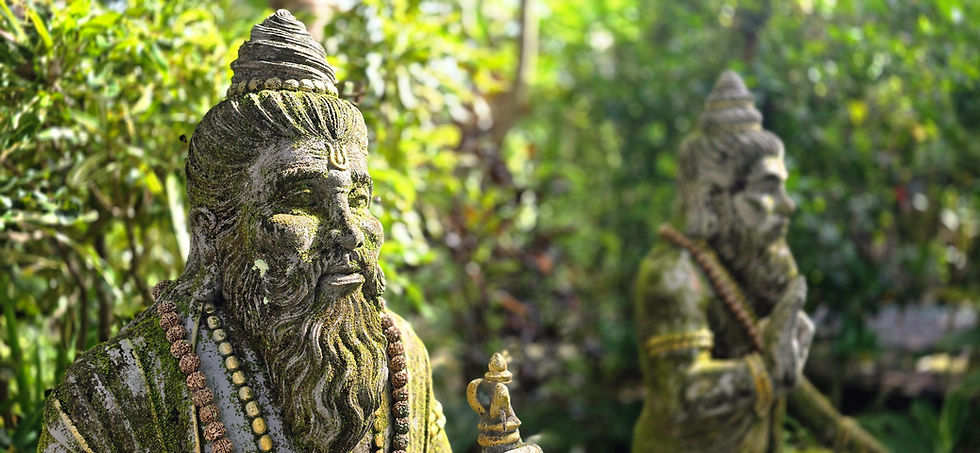
Ultimately, Moksa Temple embodies the intimate, lived spirituality of Mas Village. It is not monumental or ancient but it provides a place where villagers engage with the deepest concepts of Balinese Hinduism: liberation, balance and the interplay between seen and unseen forces. The temple’s modest shrines, ancestral focus and connection to local artistry make it a meaningful location for reflection, reverence and the quiet acknowledgment of spiritual forces that permeate everyday life on the Island of the Gods.

Thanks for reading about the Moksa Temple. Check out more awesome destinations here!

🗺️ Location
Jalan Nyuh Gading No.5, Mas Village, Ubud District, Gianyar Regency, Bali, Indonesia
🚆 How to get there
From the Sacred Monkey Forest Sanctuary in Ubud, Pura Moksa lies approximately 6km's south in Mas Village, a 25 minute car drive through narrow village roads lined with family compounds, small workshops and pockets of rice fields. Visitors can reach the temple easily by taxi or private driver, typically paying around 60,000IDR one way, while those wishing to explore Mas and nearby villages more thoroughly may hire a motorbike with a driver for around 500,000 IDR for a full day. Early morning travel is recommended to avoid congestion along Jalan Raya Ubud and to experience the temple in its quietest, most contemplative state, and as with all active Balinese temples, modest dress is essential, as daily offerings and prayers continue to shape the rhythm of this sacred space.
⭐ Attraction Info
There are no fixed opening hours, as the temple operates according to village schedules and ceremonial needs. Visitors may enter when no private rituals are taking place. Entry is free however donations are always appreciated. I visited the temple around 9am and I was the only person there. This is a functioning sacred site, not a tourist attraction, yet. Visitors should remain quiet, avoid entering restricted inner sanctums and never step over offerings placed on the ground. Sadly the entire place, which also functions as a yoga centre, was burnt to the ground in 2021 but it is mostly rebuilt as of December 2025.


